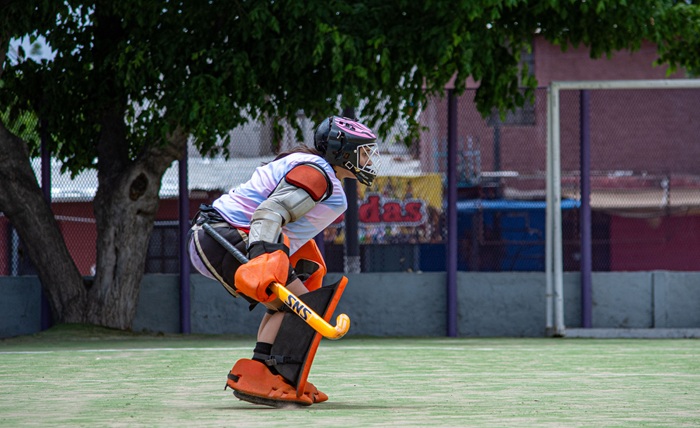
A field hockey goalkeeper can influence a match while touching the ball only a few times. Long periods may pass without a shot, followed by several attacks within seconds. Savita Punia’s career with India provides a useful case study of this position because her role has required technical skill, decision-making, communication, and the ability to perform when one action can change a match. Goalkeeping at this level is not simply about reflexes. It is about reducing the attacker’s options before the shot arrives.
Pressure makes these decisions more difficult because there is little time to correct an error. Digital formats such as the coin up lightning app also emphasize rapid sequences, but a goalkeeper’s outcome is determined by preparation, reading the play, and execution rather than a random result. Punia’s performances show how positioning and anticipation can create the conditions for a save before an attacker even begins the final shooting action.
Positioning Comes Before Reflexes
Spectacular saves receive attention, but many goalkeeping situations are decided by positioning.
The goalkeeper must constantly adjust according to the location of the ball. When an attacker approaches from an angle, Punia can shift toward the near post and reduce the visible target. When play returns toward the center, she needs to adjust again without losing balance.
Depth is another consideration. Moving forward makes the goal appear smaller to the attacker, but leaving the line also creates space behind the goalkeeper.
The correct position therefore depends on distance, passing options, the number of defenders available, and the attacker’s control of the ball.
Good positioning reduces the amount of movement required after the shot. What appears to be a reaction save may actually be the final stage of a decision made several seconds earlier.
Reading the Shooter Creates Extra Time
Shots in international hockey can arrive too quickly for a goalkeeper to depend on reaction alone.
Punia must gather information from the attacker before contact. Stick angle, body orientation, foot position, and the direction of approach can provide clues about the likely shot.
None of these signals guarantees the outcome. Attackers also use deception. The goalkeeper therefore needs to anticipate without committing too early.
This balance separates prediction from guessing.
Experience improves the process because repeated exposure allows patterns to become familiar. A goalkeeper begins to recognize which shooting options are available from particular positions and which become less likely as the attacker moves.
That knowledge effectively creates additional reaction time.
One-on-One Situations Demand Patience
When an attacker breaks through the defensive structure, the goalkeeper faces a different tactical problem.
Moving forward can reduce the shooting angle and place pressure on the attacker. However, rushing out without control allows the attacker to dribble around the goalkeeper or pass across goal.
Punia must decide how quickly to close the distance.
Her body position is important during this process. She needs to remain prepared to move laterally while also covering a direct shot. The closer she gets, the less time either player has to react.
Patience can therefore become a defensive weapon. By delaying commitment, the goalkeeper forces the attacker to reveal more information.
Penalty Corners Require a Defensive System
Penalty corners place goalkeepers under structured pressure. Unlike open play, the attacking team begins with a rehearsed routine.
The ball is injected from the baseline, controlled near the top of the circle, and then used for a drag flick, hit, deflection, or passing variation.
Punia must prepare for several possibilities while coordinating with defenders.
The first runner attempts to reduce the shooter’s time. Other defenders protect areas around the goal. The goalkeeper must understand what those players are covering and adjust her priorities accordingly.
Preparation before the match also matters. Teams study penalty-corner specialists to identify preferred directions and routines.
The save is therefore only one component of a larger defensive process.
Rebound Control Can Be as Important as the First Save
Stopping the initial shot does not always end the danger.
If a goalkeeper pushes the ball into the middle of the circle, an attacker may receive another opportunity from close range. A technically successful save can therefore create a second problem.
Top goalkeepers try to control where rebounds travel.
When possible, Punia can direct the ball toward wider areas, where defenders have more time to recover. In other situations, she may attempt to smother the ball and prevent another shot.
This requires more than reaction speed. The goalkeeper must consider the next phase while dealing with the current one.
Communication Prevents Shots
One of the goalkeeper’s advantages is perspective. From behind the defensive line, Punia can see attacking movements that teammates facing the ball may miss.
Communication allows her to use that information.
She can identify an unmarked attacker, tell defenders when to shift, or indicate where pressure is developing. During penalty corners and defensive transitions, these instructions help organize players who have little time to look around.
A prevented shot does not appear in save statistics, but it can be one of the goalkeeper’s most valuable contributions.
The best goalkeeping is partly preventative.
Pressure Changes Decision-Making
Goalkeepers face a particular form of pressure because their errors are difficult to hide. A misplaced pass or mistimed movement can result directly in a goal.
The challenge is preventing one action from affecting the next.
After conceding, the goalkeeper may need to make another decision within seconds. During tournament matches, there is no opportunity to spend several minutes analyzing the previous mistake.
Experience helps create routines. The goalkeeper resets position, returns attention to the ball, and processes the next phase.
This ability is especially important during close matches, penalty corners, and shootouts, where each action receives greater weight.
Leadership Starts Behind the Defense
Punia’s role has also demonstrated how goalkeeping and leadership overlap.
A goalkeeper can influence defensive organization because she sees the structure from behind. Her instructions can help determine how defenders mark opponents, protect central space, and respond when possession changes.
This creates responsibility beyond shot-stopping.
A goalkeeper must remain engaged even when the ball is far away. If the defensive line moves forward, she adjusts her own position. If possession is lost, she must immediately assess the developing threat.
What Makes a Top Goalkeeper?
Savita Punia’s career illustrates that elite hockey goalkeeping is built from connected skills rather than one defining quality.
Reflexes matter, but positioning can reduce the need for extreme reactions. Physical speed matters, but anticipation can provide an earlier start. Technical saves matter, but rebound control determines whether danger continues. Communication can prevent opportunities before they become shots.
Pressure connects all these elements.
The goalkeeper must execute them while knowing that a single decision may influence the score. That is why the position demands more than courage or athletic ability. It requires constant information processing, tactical discipline, technical repetition, and the capacity to reset after every action.
Punia’s example shows that top goalkeeping is not simply the art of stopping the ball. It is the process of controlling space, reducing options, organizing defenders, and being ready when the match suddenly arrives at your goal.