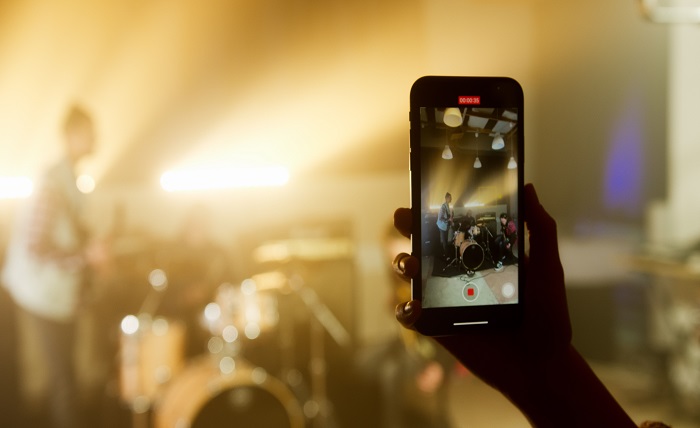
A screen used to be mainly a surface for watching something that had already been created. Live digital formats have changed that relationship. A sports stream, online event, group broadcast, or live game unfolds while the viewer is present, so the screen becomes connected to a specific moment rather than simply displaying stored content. What happens next is happening for everyone following at the same time.
That shared timing is especially visible in interactive entertainment. Live casino formats combine video, interface updates, presenter activity, and player actions within one synchronized session. Readers who want to see how this type of format is organized can read more through Slot Desi, where live games are grouped separately from standard digital titles. The technology may sit behind the screen, but the visible result is simple. People in different places can follow the same activity as it develops.
A Live Screen Feels Different From Recorded Content
Recorded media gives the viewer control over time. A video can be paused, restarted, skipped, or watched hours after it was published. Live content has another quality because the current moment matters. The viewer joins an event that is already moving forward, and that creates a stronger connection between what is happening on screen and when it is being watched.
Things like this can happen even without having tons of spectators or a major event. Actually, watching a small stream live can give the idea of being there, when all viewers are seeing more or less the same thing at about the same time. In fact, it’s quite a natural reaction for minds to get fixed on “now”.
Instead of choosing where they should watch first, the viewers stick to the timeline and the show as it unfolds. Just that adjustment alone gives the screen its double identity it is first of the content stockroom and then a real time showcase to the audience.
Real Time Interaction Creates a Sense of Participation
Live formats become more engaging when the viewer can do something instead of watching passively. A reaction can appear immediately. A chat message can become part of the conversation. A control can affect what appears next. In gaming, an action may produce a visible response within the same live session. These small exchanges help connect the person using the device with the activity taking place on screen.
Several features commonly support this feeling of participation:
- Live chat or short reactions.
- Status changes that appear immediately.
- Visible presenter responses.
- Synchronized counters, timers, or results.
- Controls connected to the current stage of an event.
Each feature gives the viewer information about what is happening now. More importantly, it confirms that the screen is connected to an active system rather than displaying a fixed sequence. The experience begins to feel shared because actions, responses, and updates belong to the same moment.
Different Devices Can Share the Same Moment
Physical location matters much less in a live digital environment. One person may be watching from a phone on a train, another from a laptop at home, and someone else from a tablet. The screens differ in size, but the event provides a common reference point. Everyone can see the same goal, round, announcement, performance, or other live action as it occurs.
Good live interfaces support this by keeping the central information easy to identify on different displays. Phones do not represent each and every detail exactly the way a large monitor does. To put simply, mobile interfaces often feature more space for the main content at the expense of the sidebar or other secondary elements only appearing at much smaller sizes or being hidden altogether at other times. This is not to provide users on all devices with the same look. It only ensures that people with different screen sizes still have the same way and are not missing out on what’s happening.
Visual and Audio Cues Keep Everyone Oriented
A live format needs to communicate quickly because the event does not stop while someone studies the interface. Camera framing can show where attention belongs. A short sound can mark a transition. A timer can indicate how long a stage will last. Changes in text or numbers can confirm that the situation has moved forward. Together, these cues give structure to an experience that is constantly changing.
Timing matters as much as design. A status message is most useful when it appears immediately after the event it describes. A camera change works best when it directs attention before the next action begins. Slot Desi and other live gaming platforms use combinations of video and interface information because neither element carries the full experience alone. The video provides presence, while digital indicators explain what stage the session has reached.
Good Live Design Shows What Deserves Attention
A live screen may contain video, controls, messages, numbers, icons, and other information at once. The challenge is deciding which element should attract the eye first. Clear visual hierarchy helps solve that problem. The current action can occupy the largest area, while supporting information stays nearby without competing with it. When priorities are visually obvious, the viewer can follow events without repeatedly searching the screen.
This becomes particularly useful when the pace changes. During a quieter moment, additional information may be easy to read. When the central action starts, attention should return there naturally. Changes in size, position, movement, or brightness can guide the eye without adding long explanations. A well organized live interface therefore behaves almost like a host. It directs attention from one moment to another while allowing the event itself to remain central.
When a Screen Starts Feeling Like a Place
The most fascinating aspect of live digital media is that information comes fast. Updates are already available in seconds via messaging applications and news feeds. The unique aspect of a live format is that it is synchronized, so there is activity that is visible, and people are aware that others are following what is happening, as well. The screen is linked with an event that is not visible to a single observer.
This is why a live format may be more personal than a page or pre-recorded video. The sequence can be experienced in different rooms, by different people. A phone, tablet or computer becomes a portal to an activity that is happening in the present moment. In entertainment, gaming, education, events and social settings, live tech is more than just a screen; it’s a launching pad that is increasingly becoming a meeting place.